
Malindi Elmore on Athlete Motherhood
Part 1 of 3: In the first stop of this series, three-time Olympian Malindi Elmore talks about how having “older” kids doesn’t make being an athlete mom in elite sport any simpler. From long runs and managing her boys’ calendars to knowing when to step away and focus, she shares what it really takes.
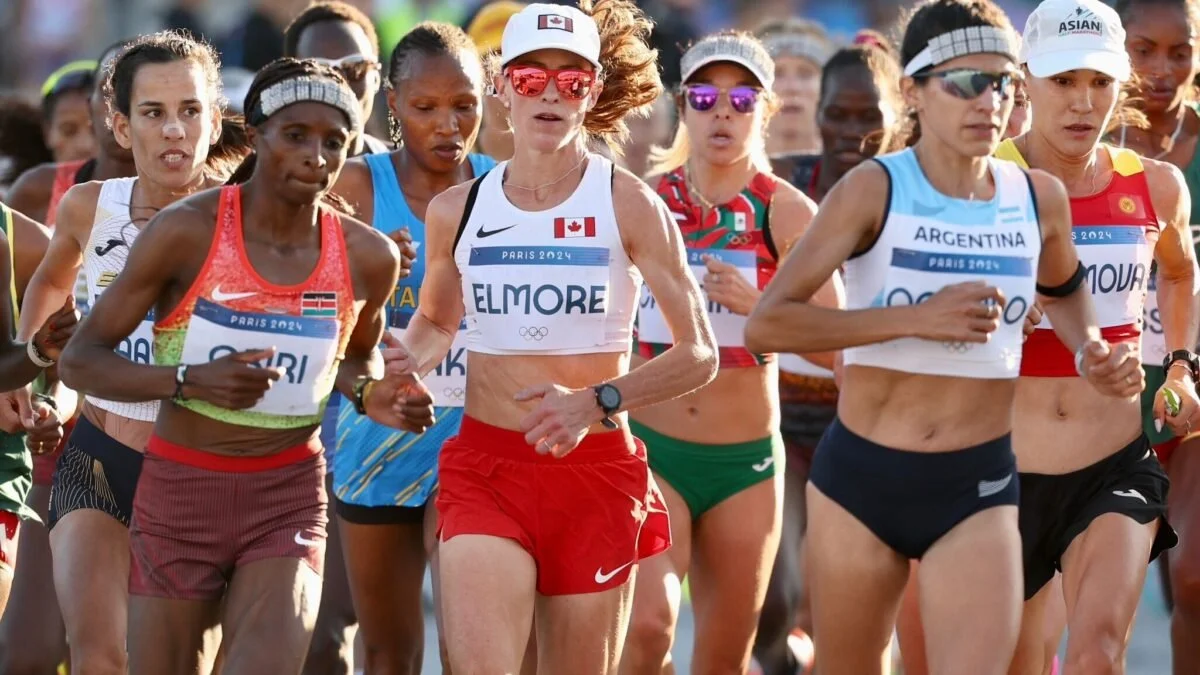
Malindi racing in the marathon at the 2024 Olympics.
Photo Credit: Nick Iwanyshyn
Malindi Elmore · Part 1 of 3
Malindi Elmore is a 3x Olympian and one of Canada’s most accomplished distance runners. She made her Olympic debut at 24 in the 1500 m at Athens 2004, then stepped away from professional running to start a family. After having her two children, she returned to elite competition, transitioning to the marathon in 2019.
At 40, Elmore qualified for the Tokyo Olympics, where she finished ninth in the marathon, the best Olympic marathon finish by a Canadian woman since 1984! Four years later, at 44, she returned to the Games in Paris, finishing 34th.
Since making the switch to the marathon, Elmore is in a league of her own. She is arguably the most successful Canadian female marathoner, owning 7 of the top 10 Canadian marathon times, including a personal best of 2:23:30 at the 2023 Berlin Marathon. And she isn’t done yet: in December 2025, at nearly 46, she ran 2:24:53 in Valencia.
As part of MOMentum’s partnership with Laurentian University, Malindi sat down with Laurentian PhD student and MOMentum co-founder Jill Moffatt OLY to chat about the aspects of athlete motherhood that don’t always make the headlines.
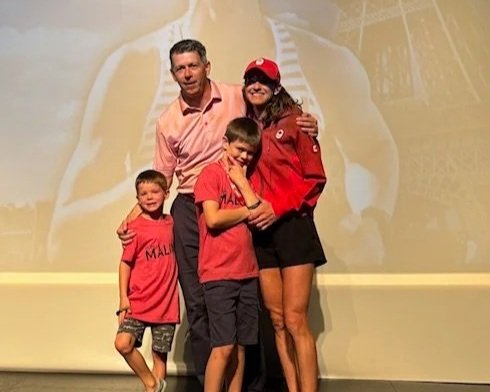
Malindi with her family ahead of the 2024 Games
The Logistics of Training with Older Kids
People often assume balancing elite sport gets easier as kids get older. What has that looked like for you with boys aged 8 and 12?
There is definitely a misconception that older kids are simpler. When they’re two, you put them in a stroller with fishy crackers and hope they nap. Older kids have strong, vocal opinions about where you eat, what you’re doing, and how far you’re walking, which demands a lot of emotional energy.
On one hand, I get more daily autonomy now. I can pop out for a 30-minute morning run after my husband leaves for work, knowing they’re safe at home. On the other hand, their lives are packed with soccer, baseball, piano, kung fu, and swimming. Fitting a long run around their calendars is a constant logistical puzzle.
What are some of the ways your family has adapted, or found ways to include the boys in your training?
One of the fun things now is that when I have a really long run, the boys sometimes come along. I might run 30 to 35 km in a loop or along a rail trail, and my husband meets me every 5 km with bottles. The kids hand me my gels as I run by, and it always makes me so happy to see them cheering, ‘Go Mom, way to go, you’re doing awesome!’
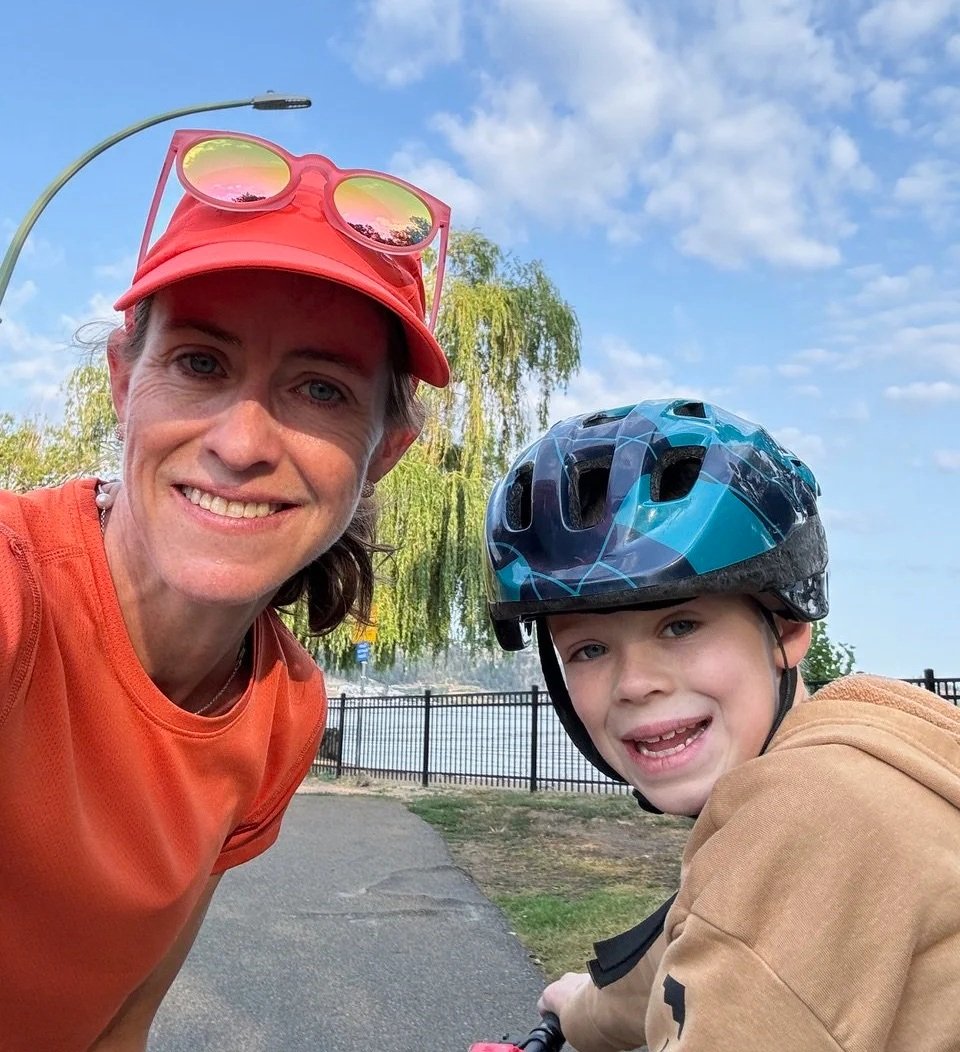
Malindi during a long run with her son.
I’ve also had to shift my training days. I do more during the week while they’re at school so weekends are freer for the family, which means I might do my long run on a Friday. Then I’m completely on my own, because my husband’s at work and nobody can bike alongside me to help break it up.
So it’s pros and cons. Sometimes I feel the only way I’ll get through a session is with support, and other times the only way we’ll get through it as a family is if I knock it out on Friday before the weekend begins.
You’re part of this, but there’s a line where I have to focus and take care of myself, and not be getting you your 13th snack of the night.
Malindi Elmore
As the boys get older, how is their relationship with your career changing, and how does that shape the way your family approaches it?
As we all get older, it’s important for them to feel like this is part of their story too. I’m taking them to more races, and we try to plan family trips around my marathons. In the past it was too hard to bring them to Europe, so they stayed home with my mom. Now they can be part of it, although they still drive me a little crazy.
Last year in Valencia, for example, I rented an Airbnb, and the kids were jet-lagged and there to have fun. Two days before my race I couldn’t sleep, because they weren’t sleeping. My youngest wasn’t even trying. He was building forts in my bed and being an overall monkey. So the night before the race, my husband and I decided I would stay in a hotel right by the start line. It was exorbitantly expensive at the last minute, especially since we were already renting the Airbnb, but I needed to get out of there. Thankfully, my husband is super supportive and recognized that. I spent the night on my own and didn’t see the boys again until after the race, though I did see them on course, which was great.
It’s about finding the right balance. You’re part of this, but there’s a line where I have to focus and take care of myself, and not be getting you your 13th snack of the night.
Coming next week: Malindi talks about the Olympic Games, and the differance between access and support.
In this series: Malindi Elmore on athlete motherhood
- Part 1: Training with Older Kids (you’re reading this one)
- Part 2: Inside the Games and the Gap Between Access and Support
- Part 3: Longevity in Sport and What Needs to Change
Acknowledgement: This interview is part of MOMentum’s partnership with Dr. Kerry McGannon at Laurentian University. Interview and writing by Jill Moffatt, OLY, MOMentum co-founder and Laurentian PhD student.
