
Malindi Elmore · Part 2 of 3
Malindi Elmore is a 3x Olympian and Canada’s most successful female marathoner, and a mother of two boys aged 8 and 12. Last week, she talked about training around her kids’ calendars and what it’s like to be an athlete mom as your children get older. This week, she takes us inside the Games, where being allowed through the door is not the same as being fully supported once you’re inside.
Miss part one? Read it here.
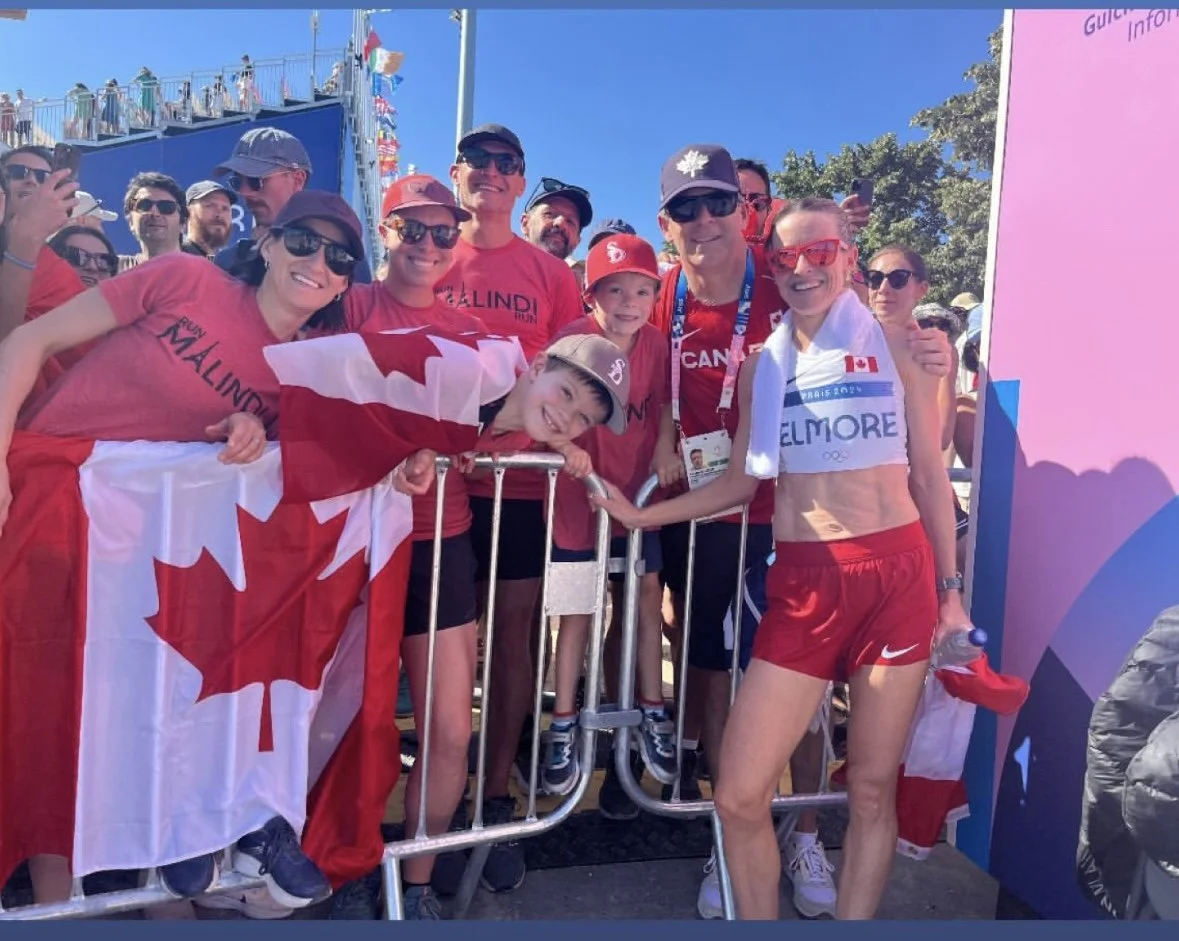
Tokyo vs. Paris: The High Emotional Load of Major Games
You competed in Tokyo during the pandemic, then brought your family to Paris. How different did those Games feel?
I actually found Japan a lot easier, because I just got on a plane and left. I only had myself to focus on once I got there. With the time change I wasn’t in touch a whole lot, and I didn’t have to be involved in the day-to-day logistics at home. That was taken care of.
Of the three Games I’ve been to, Japan was the easiest, because it was locked down. There were no other options except being basically quarantined in your hotel or at the venue, and other people couldn’t come, so it simplified the whole process.
Paris was great because my kids got to come, but because they came, everything I just described was still on the table. Once my family arrived I wanted to see them every day. They weren’t allowed in the Village, so I was making the trip into town on transit to figure out where to meet them. It’s a nine-hour time change from here, they were staying in an Airbnb with no air conditioning, it was 35 degrees out, and everyone was miserable. That takes a lot of emotional load as a mother athlete who cares a lot about her children’s comfort and happiness.
My focus shifted from how do I best prepare for this race to how do I make sure my family’s being looked after, and I’m not even staying with them. I’m doing this from the Athletes’ Village.
Even something as simple as getting your family into the right section at the marathon finish became complicated. What happened?
There was the question of where they were going to sit at the finish line and how to get tickets all together. My husband, who also coaches me, had a coaching credential, and we couldn’t get a block of tickets for our group in the same section. I wasn’t sure from a map where the different sections were, so I couldn’t just have two children sitting on their own. My husband ended up buying VIP tickets for the kids to make sure they were in the right section. They were like $1,000, and they included access to the VIP lounge, which they weren’t actually allowed to go into.
You pay through the nose just to make sure they can get in somewhere. The Olympics are a great experience, but they’re so hard once you’re on the inside, because of security, logistics, communication, and because the information isn’t available. It’s such a mega event.
I’m at the Olympics and this is really cool, and I have kids who would find it really cool too, and I want to share that with them. They are part of the team. They help with my training, they support me, and they’re part of the story.
Malindi Elmore
Paris was described as a Games that recognized mothers, including through the Village nursery. What was that like for you as a mom of older kids?
There have been changes in recognition of women with babies and the demands of nursing, for sure. But for older children, it was as if they didn’t exist. They weren’t able to access the Olympic Village, and there was no support for them.
I asked a few times if my kids could come in and see it, because I thought they would enjoy that, but it wasn’t a possibility. I asked six different people, and every time I was sent to someone else. The answer being no is fine, I can accept that, but chasing it was exhausting.
I’m at the Olympics and this is really cool, and I have kids who would find it really cool too, and I want to share that with them. They are part of the team. They help with my training, they support me, and they’re part of the story.
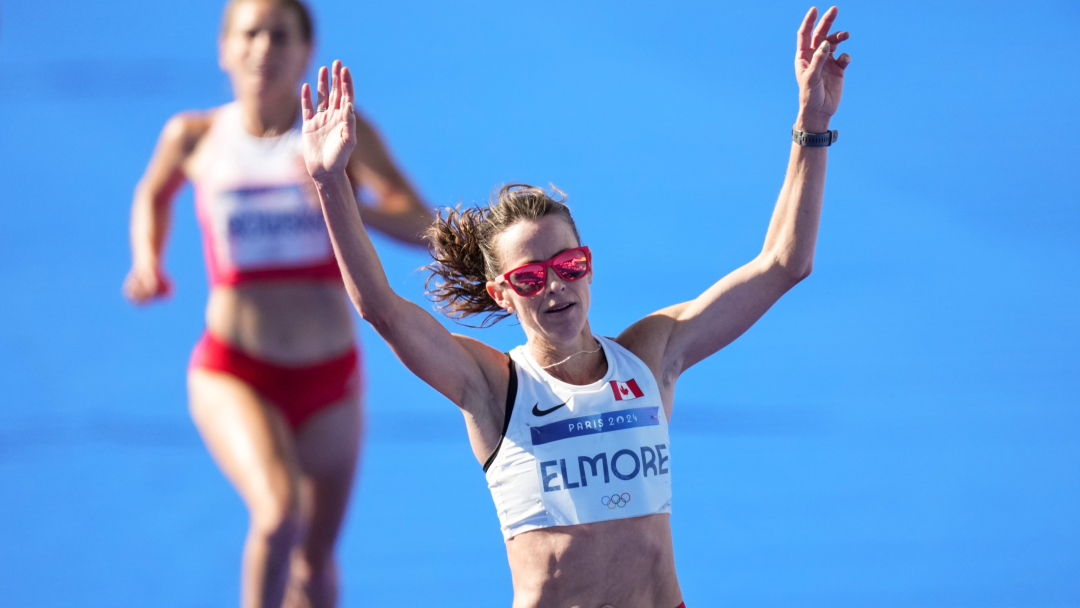
Malindi at the 2024 Olympics. Photo: Kevin Light/COC
You also faced barriers around an Athletics Canada altitude camp in Flagstaff. What happened?
It was a three-week altitude camp, and I would have loved to go because it would have benefited me. But I couldn’t leave my kids for three weeks, so I asked if I could bring them. It went back and forth through a lot of people, and the answer came back favourable in the sense that yes, they could come. But I couldn’t stay in the team accommodations with them, so I’d have to rent my own place, hire a full-time nanny, and pay for two children to fly there.
My husband is also my coach, and for an official camp they wanted his undivided attention on coaching me, so we’d have needed someone else to look after the kids. I’m not looking for somebody to pay for everything. I understand I chose to have kids and bring them with me. But by the time I covered all of that, it wasn’t feasible financially.
I’d hoped we could brainstorm other ways to make it work, like someone from the support staff spending an hour or two with the kids at the track while parents train, or allow my husband to watch the kids and coach me at the same time like we do at home. I don’t know if that’s possible. In the end it never happened. You can do it, but you’ve got to figure it out and pay for it, and those barriers are basically impossible to overcome.
Coming next week: A bone stress injury, the road to 2028, and the one change Malindi would make to how sport supports athlete parents.
In this series: Malindi Elmore on athlete motherhood
- Part 1: Training with Older Kids
- Part 2: Inside the Games and the Gap Between Access and Support (you’re reading this one)
- Part 3: Longevity in Sport and What Needs to Change
Acknowledgement: This interview is part of MOMentum’s partnership with Dr. Kerry McGannon at Laurentian University. Interview and writing by Jill Moffatt, OLY, MOMentum co-founder and Laurentian PhD student.
